
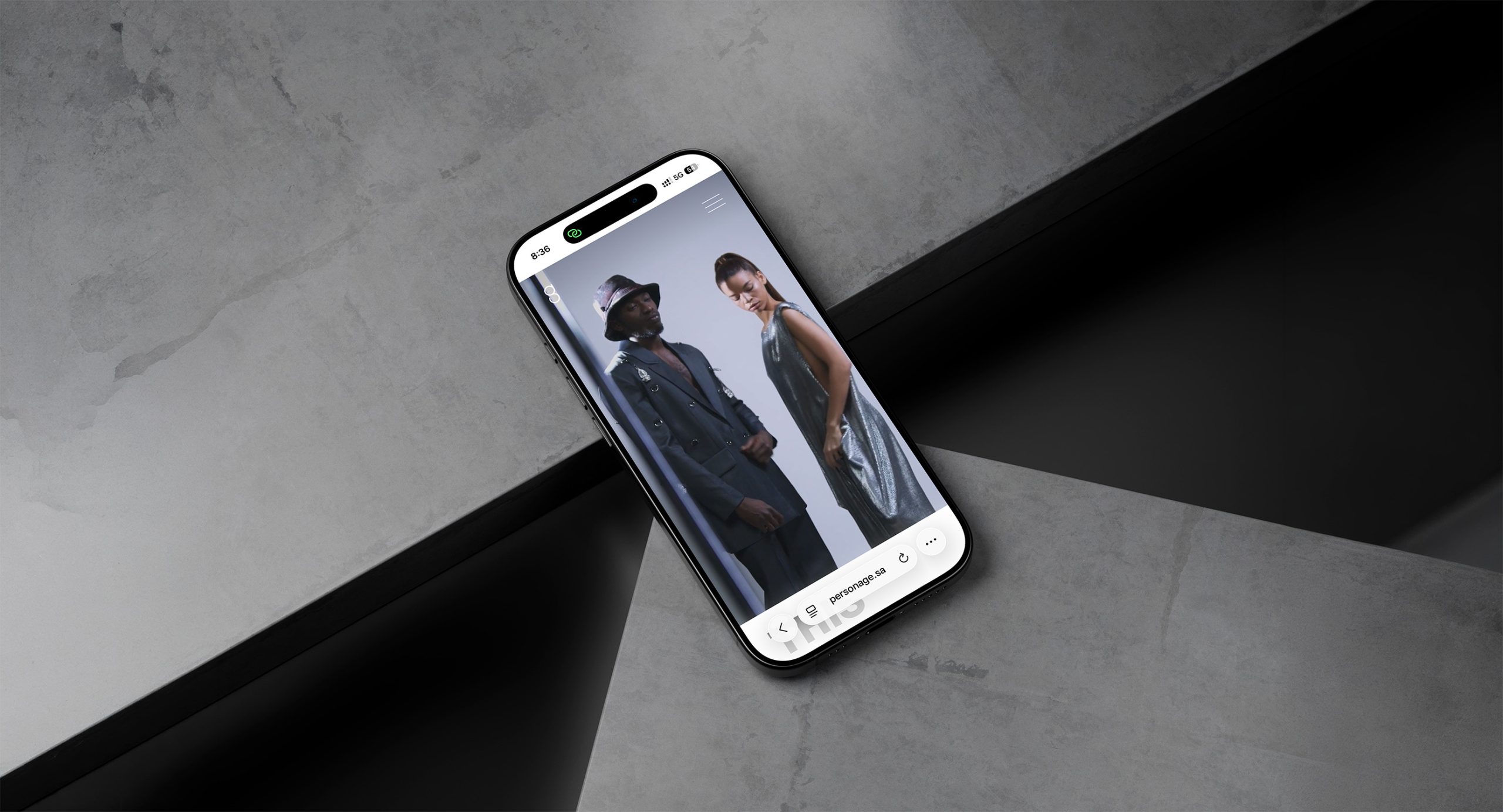
Personage – Saudi Concept Store
A live Saudi concept store combining multi-brand commerce, shoppable style personas, automated shipping, and CRM and ERP integrations, built to scale into a marketplace.
Case Study
A live Saudi concept store combining multi-brand commerce, shoppable style personas, automated shipping, and CRM and ERP integrations, built to scale into a marketplace.
Personage is a Saudi concept store built around the idea that fashion retail can operate as culture, community, discovery, and commerce at the same time. Founded in 2018, the brand exists to challenge conventional retail boundaries, elevate regional designers, and connect creative voices to wider audiences. Its digital platform therefore needed to be more than an attractive catalog. It had to become a bold editorial destination and a dependable operational ecommerce system.
Monarq delivered the website across design and development from end to end. The public experience combines product shopping, curated styles, shoppable persona-led discovery, seasonal lookbooks, community storytelling, and the Personage story. Underneath that visual layer, WooCommerce, automatic checkout shipping, CRM and ERP connections, SAR transactions, and a scalable multi-brand catalog support the practical requirements of a growing Saudi retail company.
Client Context
The brand sits at the intersection of fashion, culture, retail, and creative community. Its story is not only about products, but about giving designers and tastemakers a platform. That changes the digital requirement. The website cannot behave like a generic fashion catalog. It has to feel curated, editorial, and scalable.
The Strategic Challenge
Fashion commerce has a difficult balance. It needs to convert, but if it becomes too transactional it loses the emotional and cultural value of the brand. Personage needed a platform that could support serious commerce architecture while maintaining premium brand consistency across every touchpoint.
Experience Strategy
The strategy was to build the platform as an ecosystem, not just a shop. Product discovery, editorial direction, persona-led style journeys, brand storytelling, and scalable catalog architecture all needed to work together. The experience had to feel personal while being structured enough to grow.
Design Direction
The design direction supports luxury without becoming stiff. Fashion users need atmosphere, rhythm, and identity. The interface keeps enough editorial character to feel distinct, while maintaining the usability required for product browsing, search, filtering, and checkout behavior.
User Journey
The customer journey is shaped around identity and discovery. Users are not only searching for items; they are looking for taste, direction, and cultural alignment. The platform supports that through curated pathways, style-led presentation, and a tone that makes shopping feel more personal.
Systems and Functionality
Under the surface, the platform requires serious commerce architecture: multi-brand product management, category logic, filtering, merchandising, cart behavior, checkout, automatic shipping, operational integrations, and reusable content modules. This is what separates it from a visual storefront. The system is designed to support growth across multiple companies and designer labels.
Operational Value
For the business, the value is control and scalability. A platform like Personage needs to manage products, designers, campaigns, sales, content, and future partnerships. The website gives the team the operational base to grow without losing the brand consistency that makes the concept premium.
Scalability and Future Growth
The long-term opportunity is significant. Personage can expand the number of brands, companies, products, categories, style personas, and editorial collections it manages without abandoning the system that supports the current store. The foundation connects creative flexibility with operational scalability and establishes a route toward the brand’s long-term goal of becoming a broader marketplace.
Monarq’s Design and Development Role
Monarq handled the complete website design and development. That responsibility included the visual system, information architecture, product and category experience, content-led discovery, responsive layouts, cart and checkout behavior, integration requirements, and the technical foundation supporting daily commerce.
The work was not divided into an expressive marketing site and a generic store. Editorial presentation and transactional functionality were designed as one platform. This creates consistency from the first campaign image through product discovery, cart review, shipping calculation, payment preparation, and post-purchase data flow.
A Saudi Concept Store
Personage identifies itself as a concept store rather than a conventional retailer. The platform brings together fashion, creative direction, models, seasonal narratives, designers, community activity, education, and agency work. Shopping is one important part of a wider cultural proposition.
The website gives that proposition a clear digital form. Users can move between commerce and story without feeling that they have entered unrelated sections. Products remain purchasable, but the surrounding context makes them part of a point of view rather than anonymous inventory.
Regional Designers and Global Visibility
The Personage story is rooted in creating space for regional designers to be seen, celebrated, and elevated toward a global stage. The platform supports that ambition by giving brands and products a presentation environment designed for discovery and credibility.
Multi-brand structure is essential here. New companies and designer labels need to enter a system that can organize them clearly while preserving the visual flexibility required by fashion. The platform gives Personage a base for expanding representation without turning its catalog into an uncurated marketplace.
Bold Editorial Design
The visual direction is bold, contemporary, and intentionally fashion-led. Strong type, changing compositions, campaign imagery, curated copy, and product carousels give the homepage the rhythm of an editorial platform. It feels active and culturally aware rather than neutral.
Boldness is balanced with functional clarity. The interface can change tone between stories and collections, but product prices, categories, calls to action, and shopping paths remain legible. The design expresses confidence without requiring users to decode the commerce experience.
Find Your Persona
The platform’s central idea is personal direction. Users are invited to discover a persona, not simply select a garment. Styles, models, curators, seasonal edits, and product categories create different entry points into the catalog according to identity and mood.
This reframes fashion discovery around people and perspective. A shopper may begin with a model, a style, a campaign, a seasonal story, or a direct product need. All of those paths eventually connect to structured commerce data and a consistent purchase journey.
Shoppable Style Personas
The Models section is structured around different style profiles or personas. Each profile represents a distinct way of dressing and groups clothing selected for that identity. Users can begin from a character, mood, or visual direction, then browse the products Personage has associated with it.
This creates editorial and commercial value at the same time. Instead of asking every shopper to understand the complete catalog, Personage offers recognizable style worlds that make discovery feel more personal. New profiles can be introduced as fashion direction, communities, and inventory evolve.
Styles and Category Filtering
Product discovery is supported through Men, Women, Sale, all products, and filtering by type, style, and model. These different systems reflect the way fashion customers actually browse. Some know the category they need; others follow an aesthetic, person, or seasonal direction.
Structured filtering helps a multi-brand catalog remain understandable as inventory grows. It also gives the business a stronger merchandising framework, allowing the same product data to participate in multiple curated journeys without duplicating products manually.
Seasonal Lookbooks
Personage uses lookbooks to document seasonal narratives including summer, winter, Ramadan, fall, and other campaign periods. Each collection can carry its own visual language, styling, mood, and cultural context while remaining accessible through a continuing archive.
The archive turns past creative work into lasting digital value. Campaigns do not disappear when a homepage changes. Users can explore how Personage evolves, while the business gains a structured space for future seasons and creative collaborations.
Community and Cultural Ecosystem
Beyond retail, Personage describes workshops, education, global outreach, collaboration, and agency projects. These activities position the company as an ecosystem supporting creative growth and exchange, not only a seller of fashion products.
The website makes room for that wider role without weakening the store. Community and story content strengthen the brand’s authority, while ecommerce provides the infrastructure through which discovery can become a purchase.
Riyadh Physical and Digital Connection
The platform connects users to the Riyadh location, allowing the physical concept-store presence and the ecommerce experience to support one another. Customers can discover the story and product world online while understanding that Personage also exists as a real retail and cultural destination.
This connection is valuable for trust. A strong digital platform extends the location’s reach beyond Riyadh, while the physical store gives the online brand a tangible center of gravity.
WooCommerce Foundation
The live commerce layer uses WooCommerce for product, cart, checkout, order, and catalog behavior. Monarq customized the experience around Personage rather than allowing the underlying commerce platform to dictate the public identity.
This approach combines established transactional capabilities with an original design system. The business gains familiar operational foundations, while users encounter an interface shaped specifically around Personage’s fashion and cultural positioning.
Multi-Brand and Multi-Company Scalability
The catalog is designed to support products from multiple brands and companies. Product records, categories, styles, model associations, campaign placement, and merchandising rules need to remain structured as the commercial ecosystem expands.
Scalability is both technical and editorial. The platform can hold more inventory, but it can also create new ways of curating that inventory. Growth does not have to result in a flat grid of products because the same system supports stories, selections, models, and seasons.
Live Cart and Checkout
The journey continues from discovery into a functioning cart and checkout priced in Saudi riyals. Product choices, pricing, reductions, order attribution, and checkout actions operate inside the same platform rather than directing users to a disconnected external store.
This continuity protects trust and conversion. The bold visual identity creates desire, while familiar and dependable commerce behavior helps the customer complete a purchase without unnecessary uncertainty.
Automatic Shipping Calculation
Shipping is calculated automatically during checkout according to the information and rules connected to the order. Customers receive relevant delivery costs as part of the purchase flow instead of relying on manual follow-up or unclear fixed messaging.
For the business, automation reduces repetitive operational work and makes scaling order volume more realistic. For the customer, it creates transparency at a critical decision point and allows the total cost to be understood before completing the order.
CRM Integration
The platform integrates with Personage’s company CRM so that customer and commerce activity can contribute to the wider relationship-management process. The case study does not disclose or claim a specific vendor because the provider has not been named publicly.
The important outcome is connected data. Ecommerce interactions do not remain trapped inside a storefront. They can support customer service, retention, communication, segmentation, and future relationship strategies through the systems already used by the company.
ERP Integration
ERP integration connects digital commerce with the operational structure behind the business. Product, order, stock, or related commercial information can move within the company’s broader systems according to the implemented workflow.
This is essential for a scalable multi-company store. A visually impressive frontend cannot support growth if every transaction creates manual reconciliation work. ERP connectivity turns the website into part of the business infrastructure rather than an isolated sales channel.
Integration Architecture
CRM, ERP, checkout, shipping, catalog, and editorial content all have different responsibilities. The platform has to keep those boundaries clear while allowing information to move reliably. Integration architecture becomes a core part of the user experience because operational failures eventually appear as inaccurate products, delayed orders, or poor service.
Monarq’s development work therefore extends beyond visible interface components. The platform coordinates customer-facing commerce with the systems required to fulfil and manage it behind the scenes.
Product Carousels and Swiper Interaction
Swiper supports product and content carousels throughout the platform. These components allow curated selections to remain compact, responsive, and easy to explore across devices. They are used to support editorial direction rather than simply rotate arbitrary products.
Carousel behavior is integrated into the visual system and product data, giving Personage reusable modules for weekly picks, featured products, styles, and future campaigns.
Responsive Commerce
Fashion discovery frequently begins on mobile through campaigns, social links, and recommendations. The platform adapts navigation, carousels, product layouts, filtering, cart behavior, and editorial content to smaller screens without losing the bold Personage identity.
Responsive work also protects functionality at the most important points. Product information, prices, shipping steps, and checkout controls need to remain readable and touch-friendly even when the surrounding brand experience is visually expressive.
Performance and Catalog Growth
Large fashion catalogs and image-led storytelling can create performance pressure. Product imagery, carousels, campaign media, filters, and commerce scripts have to coexist without making browsing feel unstable. The development balances visual richness with the need for practical speed.
As more brands and products are added, structured content and reusable modules help prevent the homepage and catalog from becoming unmanageable. Performance and maintainability are treated as continuing requirements, not one-time launch checks.
Operational Control
Personage receives a platform through which products, prices, reductions, categories, styles, models, seasonal stories, and featured selections can be managed with consistency. Integrations reduce the distance between the ecommerce storefront and the company’s internal operations.
This gives the team more control over both presentation and fulfilment. Creative campaigns can change frequently while the commerce and integration foundation remains stable underneath them.
Portfolio Value for Monarq
Personage demonstrates Monarq’s ability to unite bold design with serious commerce engineering. The project is visually suited to a concept fashion brand, but its portfolio value comes equally from the multi-brand catalog, checkout, automated shipping, CRM and ERP connectivity, responsive product discovery, and operational scalability.
It shows that creativity and functionality do not have to be traded against one another. The same platform can feel culturally distinctive to a shopper and behave like dependable business infrastructure for the company operating it.
A Fully Live Operating Platform
The functionality described in the current case study is live. Customers can browse real products, explore styles and profiles, use category pathways, add items to cart, move through checkout in SAR, and receive automatic shipping calculations. CRM and ERP connectivity supports the operational flow behind the storefront.
This matters for how the project is evaluated. Personage is not a speculative design prototype or future-state concept. It is an operating ecommerce platform whose visual ambition is supported by working systems, with the marketplace positioned clearly as the next stage of growth.
Marketplace Roadmap
Personage is fully operational today as a multi-brand concept store, while its long-term ambition is to scale into a broader marketplace. The distinction is important: the case study does not present every future marketplace capability as already launched. It shows how the live commerce, catalog, CRM, ERP, shipping, editorial, and multi-company foundations prepare the business for that evolution.
A marketplace introduces greater complexity around participating companies, catalog governance, inventory, fulfilment, customer service, merchandising, and reporting. By building structured integrations and scalable product discovery now, Personage can approach that future as an expansion of working infrastructure rather than a complete restart.
Outcome
Personage becomes a complete and fully live Saudi concept-store platform with cultural depth and operational substance. It sells through a working WooCommerce experience in SAR, calculates shipping automatically at checkout, supports multiple brands and companies, and connects ecommerce activity to the business’s CRM and ERP environment.
At the same time, the platform curates. Shoppable style personas, weekly picks, seasonal lookbooks, regional designers, community initiatives, and the Riyadh location create a fashion ecosystem rather than a generic storefront. Monarq’s end-to-end design and development give Personage a bold public identity, a scalable commercial foundation, and a credible path toward its long-term marketplace ambition without losing its point of view.