
TLT Signature Hotels
TLT Signature Hotels needed a first digital presence built from zero. Monarq created a research-led platform that communicates atmosphere, reduces uncertainty, and supports future property expansion.




Case Study
TLT Signature Hotels needed a first digital presence built from zero. Monarq created a research-led platform that communicates atmosphere, reduces uncertainty, and supports future property expansion.
TLT Signature Hotels was built as a digital presence from zero. There was no legacy website to improve, no inherited structure to clean up, and no existing user journey to refine. This created a rare opportunity to define the brand’s first digital expression as a complete system, not just a set of pages.
Client Context
Developed by TLT Concepts, TLT Signature Hotels is a hospitality brand centered on curated experiences. The brand needed a platform that could communicate atmosphere, reassure potential guests, and support booking behavior while remaining flexible for future growth.
The Strategic Challenge
When a hospitality website starts from nothing, every decision becomes foundational. The question is not only what content should appear, but how a guest should feel, think, and move through the experience. The platform had to communicate trust without relying on excessive content or heavy visual noise.
Research-Led Structure
Monarq approached the project through user behavior rather than surface preference. Hospitality users often seek reassurance before they act. They want to understand rooms, facilities, location, comfort, and brand tone without working too hard. The structure was built to answer those questions early and naturally.
First Impression Strategy
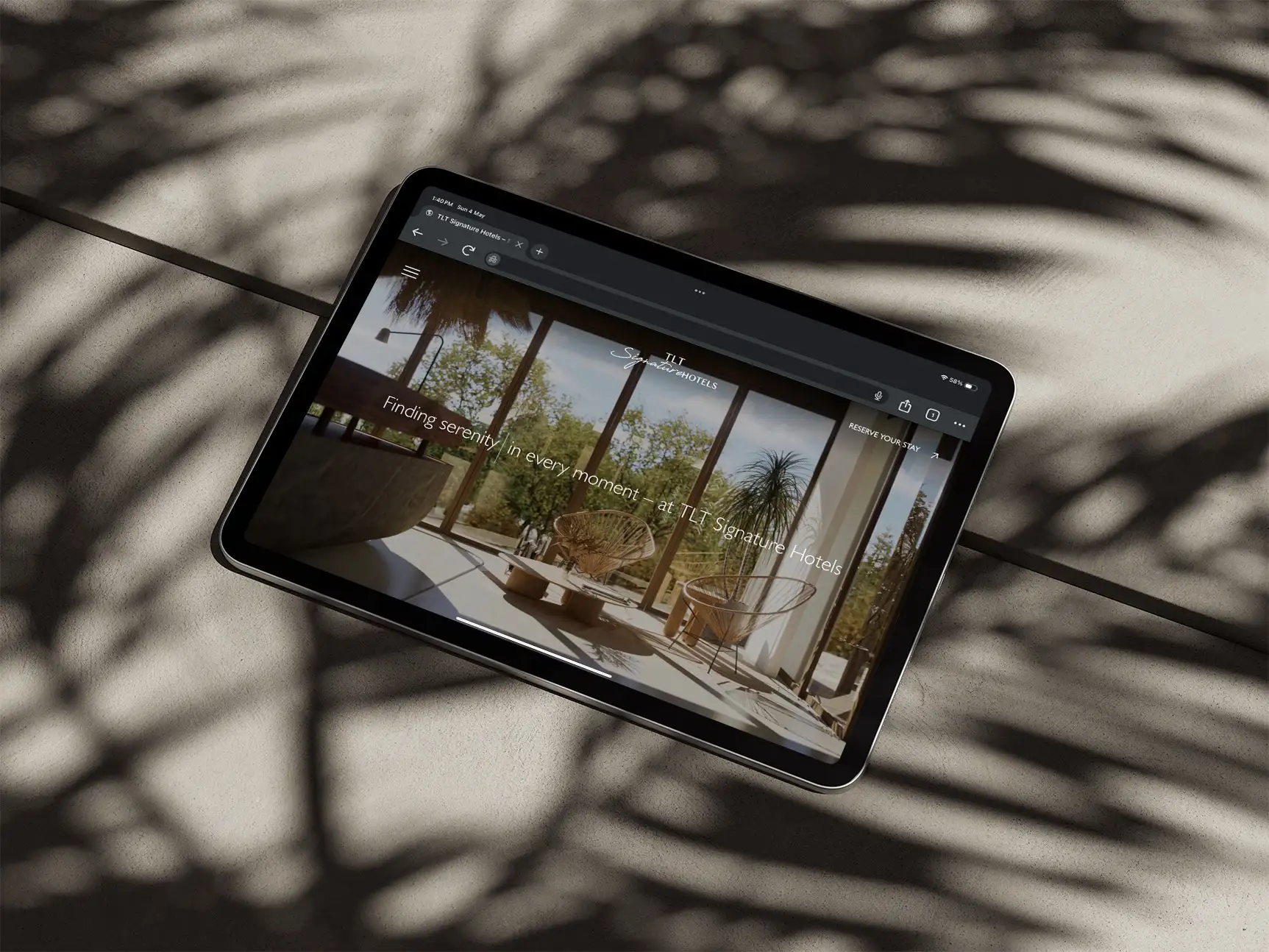
Because the brand was establishing its digital presence for the first time, the opening experience had to do a lot of work. It needed to create atmosphere, clarify the offer, and make the hotel feel credible within seconds. The design avoids over-explaining and instead uses a confident sequence of visuals, copy, and navigation cues to establish direction.
Experience Design
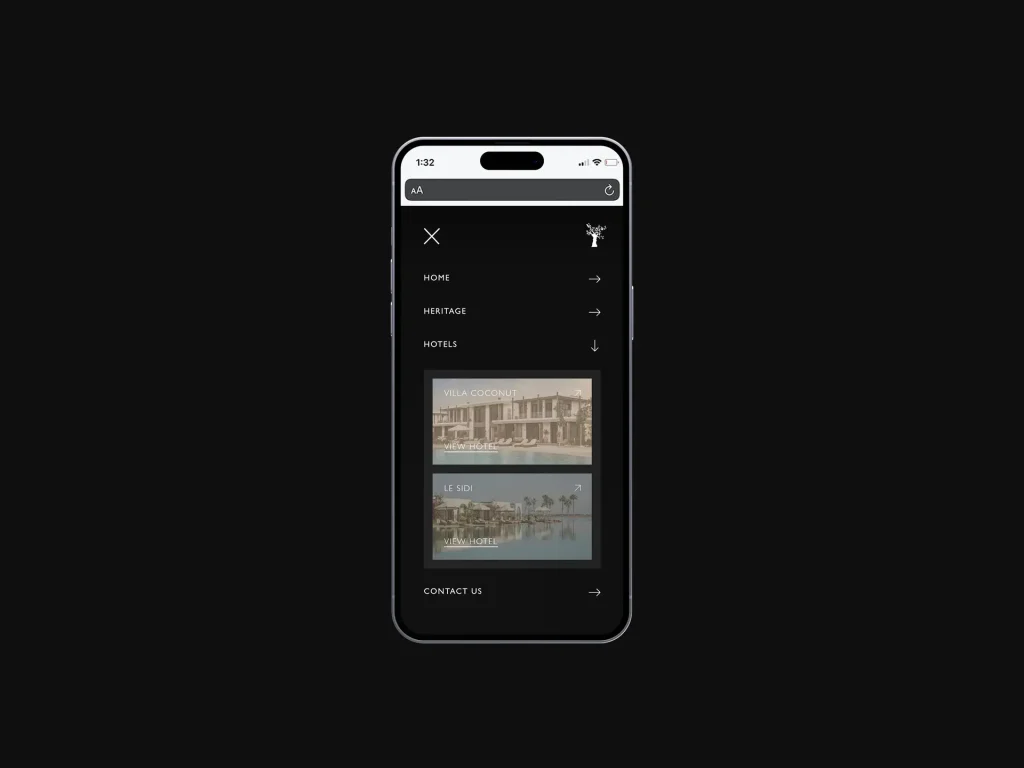
The website was designed as a guided sequence. Landing sections establish atmosphere. Supporting sections clarify expectations. Booking-related moments appear only once the user has enough context. This keeps the journey calm and prevents the booking flow from feeling disconnected from the rest of the experience.
Information Architecture
Because the platform is intended to grow, the content model had to be modular. Room information, facilities, storytelling sections, and future property content are organized so they can be reused and expanded without creating inconsistency. This is especially important for hospitality brands that may add new locations over time.
Booking Flow Thinking
Booking is treated as the result of understanding. The site does not push users into action before uncertainty is reduced. By the time the user reaches a booking point, the interface has already answered the major emotional and practical questions. This improves confidence and protects conversion intent.
Visual Direction
The design language is composed, warm, and restrained. It communicates hospitality through clarity and atmosphere rather than excess decoration. Visuals support comfort and trust, while the interface remains simple enough to navigate without explanation.
Content and Tone
The content direction needed to feel welcoming but not generic. Hospitality copy can easily become interchangeable, so the tone was shaped around specific guest expectations: comfort, ease, location, service, and confidence. Each section was written to move the user forward rather than simply decorate the page.
Performance and Stability
Performance is part of credibility. A hotel website that loads slowly or behaves inconsistently can make the brand feel unreliable. The platform was designed with technical restraint, optimized assets, and stable layouts so the experience feels smooth across devices.
Collaboration
The project required close collaboration between TLT Concepts and Monarq because the digital identity was being formed in real time. Strategy, content, design, and development evolved together. Decisions were tested against the guest journey rather than treated as isolated preferences.
Future Readiness
The platform is prepared for future expansion into additional properties, deeper booking functionality, and more complex content needs. Its value is not only in what users see today, but in how well the system can support what the brand becomes next.
Operational Value
Starting from zero allowed the team to create a more disciplined content foundation. Room information, guest-facing sections, visual assets, and calls to action can all be managed within a clearer structure. That gives the brand a more dependable base for marketing campaigns, updates, and future property launches.
Client and Market Position
TLT Signature Hotels began with the rare challenge of building a first digital impression from zero. The client needed more than a website. It needed a digital foundation that could introduce the brand, make it feel trustworthy, and prepare it for future hospitality growth.
Guest Psychology
When users encounter a hospitality brand for the first time, they are looking for signals of legitimacy. They want to know whether the place feels real, comfortable, organized, and worth considering. The website was built to answer those quiet questions through structure, tone, imagery, and pacing before the user has to search for reassurance.
Reducing Uncertainty
New hospitality brands have to work harder to build confidence because there is less inherited familiarity. The experience therefore focuses on clarity: what the brand offers, what the guest can expect, how the rooms and facilities are positioned, and where the user should go next. The more calmly the website answers those questions, the more credible the brand feels.
Business Perspective
For TLT Concepts, the platform gives the brand a scalable base instead of a temporary launch page. It can support future properties, deeper booking functionality, content growth, and marketing activity. The website becomes the first layer of a broader hospitality system.
Competitive Context
For a new hospitality presence, the website has to compete with both established hotel brands and third-party booking ecosystems. TLT Signature Hotels needed to create credibility quickly. The platform gives the brand a direct voice and helps users understand the experience before comparing it elsewhere.
Content and SEO Thinking
The content model supports future discoverability through room information, facilities, location context, and hospitality storytelling. Because the brand is intended to grow, the structure was planned so new content can be added without weakening the original experience.
Performance and First-Time Trust
When users meet a brand for the first time, performance becomes part of the first impression. A stable, fast, visually clear website makes the brand feel more legitimate. The platform was designed to create that confidence before users reach a booking decision.
Measurement and Future Growth
The site creates a base for learning what future guests care about: which sections they explore, what content builds confidence, and where booking intent appears. That feedback can guide future property pages, campaigns, and digital service improvements as the brand expands.
Outcome
TLT Signature Hotels now has a digital platform that acts as the entry point to the hospitality experience. It guides users from first impression to booking intent with clarity and restraint, while giving the brand a scalable foundation for long-term growth.